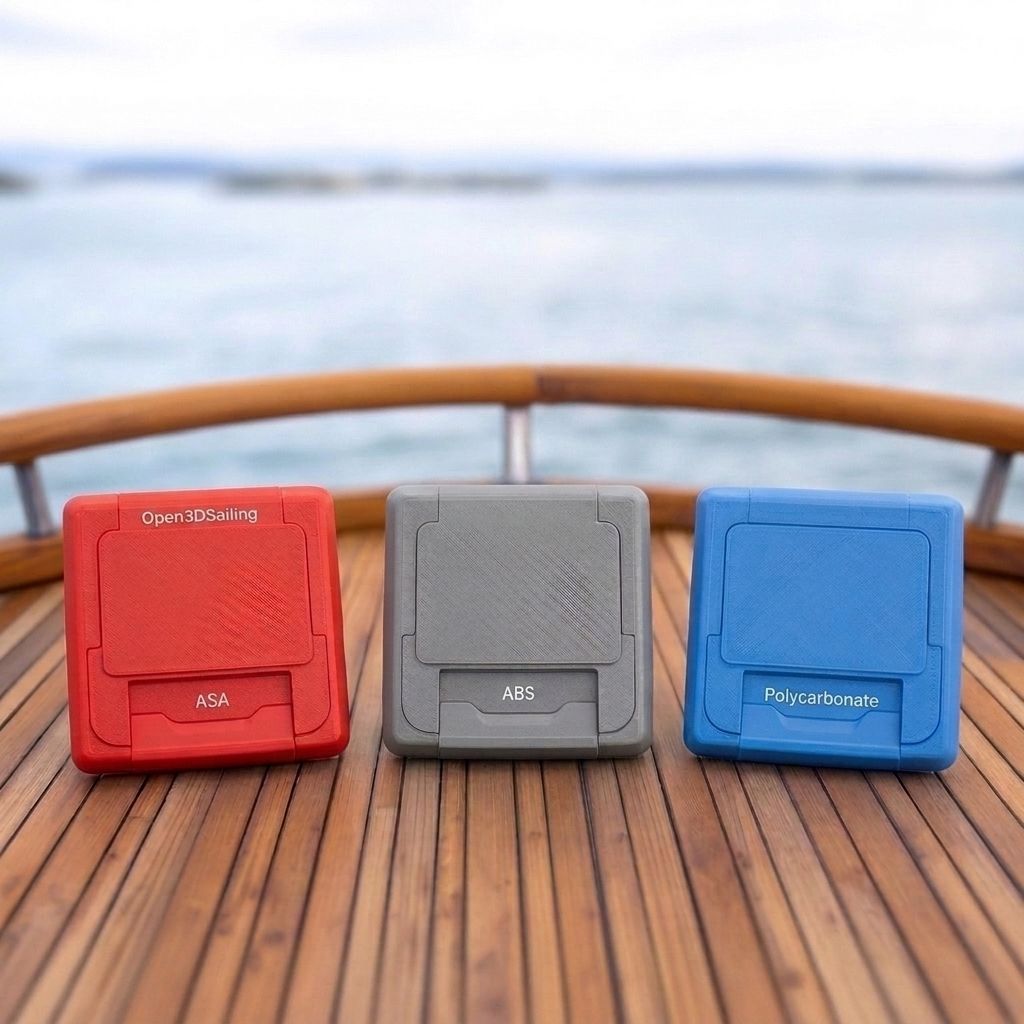
ASA vs ABS vs Polycarbonate: Best Plastic for Marine Use
Not all plastics are created equal — especially when it comes to long-term exposure to sun, salt, and temperature swings on a boat. Here's how the three most common plastics compare, and why we chose ASA thermoplastic for our suncovers.
ABS: Common but Vulnerable to UV
ABS (Acrylonitrile Butadiene Styrene) is widely used in consumer electronics for its strength and ease of molding. However, ABS is prone to UV degradation: prolonged sun exposure causes it to fade, become brittle, and eventually crack. This is why many older marine instrument housings yellow and weaken over time.
Polycarbonate: Strong but Prone to Yellowing
Polycarbonate is valued for its impact resistance and is often used in protective housings and lenses. Its main weakness is UV sensitivity — unprotected polycarbonate yellows and becomes hazy after years in direct sunlight, even though its mechanical strength remains relatively high.
ASA: Built for Outdoor and Marine Exposure
ASA (Acrylonitrile Styrene Acrylate) was specifically developed as a weather-resistant alternative to ABS. Its key advantages for marine applications:
- Excellent UV resistance — color and structural integrity remain stable over years of sun exposure.
- Resistant to saltwater and humidity without degrading.
- Maintains impact resistance and flexibility in cold temperatures.
- Doesn't yellow or become brittle like ABS or unprotected polycarbonate.